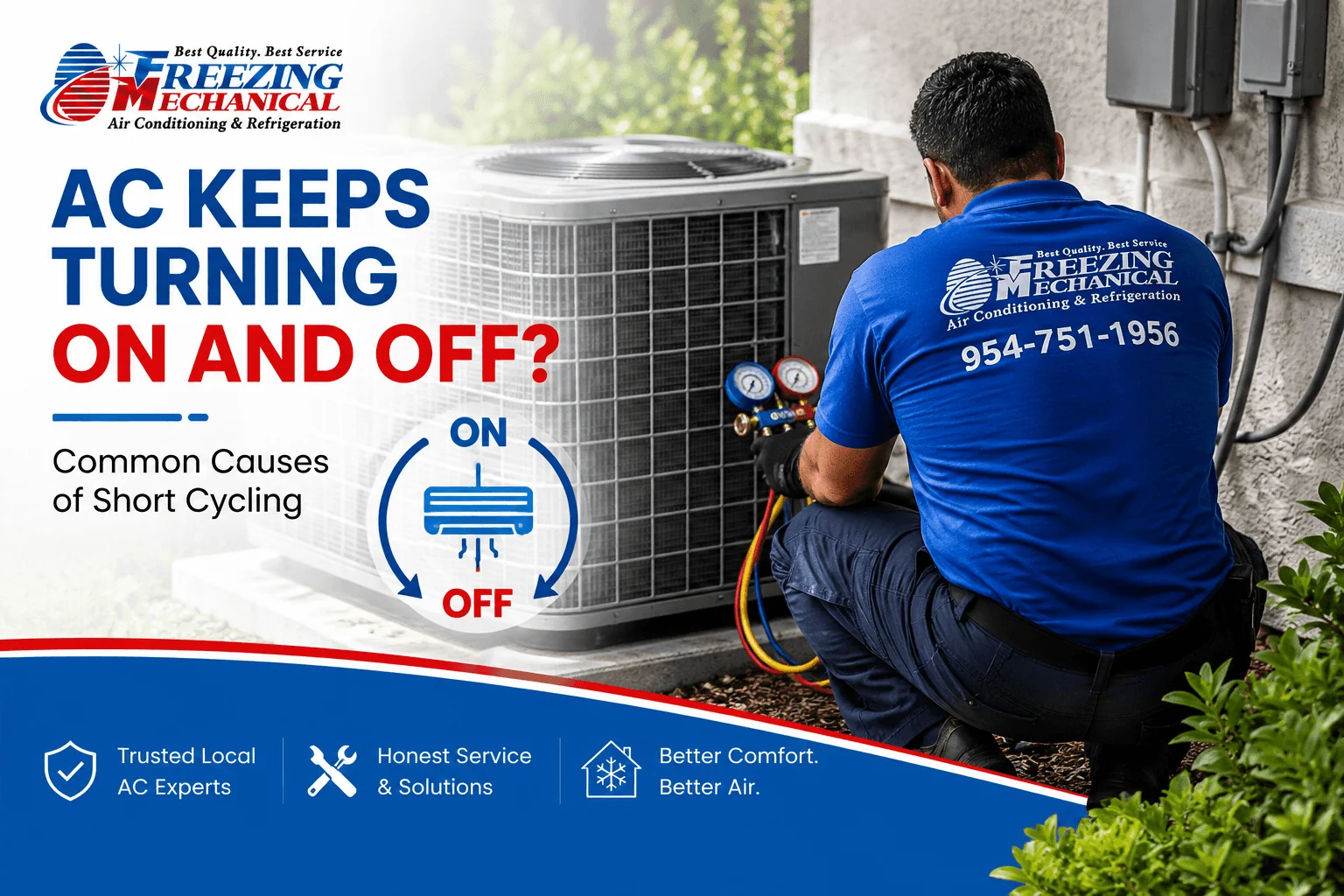
If your AC keeps turning on and off, your system may be short cycling. This can make your home less comfortable, raise your energy bill, and put extra strain on your air conditioner.
When your air conditioner is working properly, it should run in steady cooling cycles. It turns on, cools your home, removes moisture from the air, and then shuts off once the temperature reaches the thermostat setting.
But if your AC keeps turning on and off every few minutes, something may be wrong. This issue is called short cycling, and it can make your home less comfortable, increase your electric bill, and put extra strain on your AC system.
In South Florida, where air conditioners work hard through long, hot summers, short cycling is not something you want to ignore. Here are the most common reasons your AC may keep turning on and off and what homeowners should know.
What Is AC Short Cycling?
AC short cycling happens when your air conditioner starts a cooling cycle but shuts off too soon before completing it. Instead of running long enough to cool and dehumidify your home properly, the system keeps stopping and restarting.
A normal cooling cycle can vary depending on the home, system size, thermostat setting, and outdoor temperature. But if your AC turns on and off repeatedly within short periods, that is usually a sign of a problem.
Short cycling can lead to:
- Poor indoor comfort
- Higher energy bills
- More wear on the system
- Reduced humidity control
- Uneven temperatures
- More frequent repairs
- Shorter AC system lifespan
If this keeps happening, the cause should be inspected before it leads to a larger repair.
1. A Clogged Air Filter Can Restrict Airflow
One of the most common causes of short cycling is a dirty or clogged air filter.
Your AC needs steady airflow to operate correctly. When the filter is packed with dust, dirt, pet hair, or debris, air cannot move through the system properly. This can cause the system to overheat or freeze up, which may force it to shut down early.
Signs your air filter may be the problem:
- Weak airflow from vents
- AC turns on and off frequently
- The home feels warmer than usual
- Dust around vents
- Higher electric bills
- Ice on the indoor unit or refrigerant line
During the summer, AC systems in Miami and surrounding areas run often, so filters can get dirty quickly. Homeowners should check the filter regularly and replace it when needed.
2. Thermostat Problems Can Cause Short Cycling
Your thermostat tells the AC when to turn on and off. If the thermostat is not reading the temperature correctly, it may cause your system to cycle too often.
This can happen if the thermostat is:
- Installed in direct sunlight
- Too close to a vent
- Near an exterior door or window
- Located near heat-producing appliances
- Dirty or malfunctioning
- Not calibrated correctly
- Set incorrectly
For example, if the thermostat is near a supply vent, it may sense cool air too quickly and shut the system off before the rest of the home is comfortable.
What to check:
- Make sure the thermostat is set to Cool
- Set the fan to Auto, not On
- Check that the thermostat is not near direct sunlight or airflow
- Replace batteries if needed
- Make sure the temperature setting is reasonable
If the thermostat is older or unreliable, replacing it may help improve comfort and system performance.
3. Frozen Coils Can Make the AC Shut Off Early
Frozen evaporator coils can also cause your AC to short cycle.
Your evaporator coil is responsible for absorbing heat from indoor air. If airflow is restricted or the system has another issue, the coil may get too cold and freeze. Once ice forms, your AC cannot cool properly and may begin turning on and off.
Common causes of frozen coils include:
- Dirty air filters
- Blocked return vents
- Dirty evaporator coils
- Low refrigerant
- Poor airflow
- Blower motor issues
Signs of frozen coils:
- Ice on the indoor unit
- Ice on refrigerant lines
- Warm air coming from vents
- Weak airflow
- Water around the unit after ice melts
- AC keeps turning on and off
If you see ice, turn the system off and let it thaw. Do not keep running the AC while the coil is frozen because that can cause more damage.
4. Refrigerant Issues Can Affect Cooling Cycles
Low refrigerant can cause your AC to struggle with cooling and may lead to short cycling. Refrigerant is what allows your AC system to absorb and move heat out of your home.
If refrigerant is low, it usually means there is a leak somewhere in the system. This is not something homeowners should try to fix on their own.
Signs of a refrigerant issue:
- AC turns on and off frequently
- Home is not cooling well
- Ice on refrigerant lines
- Hissing or bubbling sounds
- Higher energy bills
- Warm air from vents
- Longer or irregular cooling cycles
A licensed HVAC technician can check refrigerant levels, inspect for leaks, and determine the proper repair.
5. The AC System May Be Too Large for the Home
An oversized air conditioner may sound like a good thing, but it can actually cause comfort problems.
If the system is too large for the home, it may cool the air too quickly and shut off before completing a proper cycle. This means the home may reach the thermostat setting, but the AC does not run long enough to remove humidity.
In South Florida, this can leave your home feeling cool but sticky or damp.
Signs your AC may be oversized:
- AC cycles on and off frequently
- The home cools quickly but feels humid
- Some rooms feel colder than others
- Indoor comfort feels inconsistent
- Energy bills are higher than expected
- The system does not run long enough to dehumidify
Proper AC sizing is important for both cooling and humidity control. A system that is too large may create just as many problems as one that is too small.
6. Dirty Coils Can Cause the System to Work Harder
Your AC coils need to stay clean to transfer heat properly. When dirt, dust, or buildup collects on the evaporator coil or outdoor condenser coil, the system has to work harder to cool your home.
That extra strain can lead to overheating, poor cooling, or short cycling.
Signs dirty coils may be affecting your system:
- AC turns on and off often
- Cooling performance drops
- System runs louder than usual
- Energy bills increase
- The outdoor unit feels very hot
- Warm air comes from vents
Routine maintenance helps keep the coils clean and allows your system to run more efficiently.
7. Electrical or Control Issues Can Interrupt the Cycle
Sometimes short cycling is caused by an electrical or control problem rather than airflow or cooling performance.
Potential issues include:
- Faulty capacitor
- Failing contactor
- Loose wiring
- Control board issues
- Safety switch problems
- Blower motor problems
These issues can cause the AC to start and stop unexpectedly. Electrical problems should always be inspected by a professional because they can create safety risks and may damage the system if ignored.
8. A Clogged Drain Line Can Shut the System Off
Your AC removes moisture from the air, and that water drains through the condensate line. If the drain line becomes clogged, the safety switch may shut the system off to prevent water damage.
In humid climates, drain lines can clog from algae, dirt, and buildup.
Signs of a clogged drain line:
- AC shuts off unexpectedly
- Water near the indoor unit
- Full drain pan
- Musty smell
- Higher indoor humidity
- System starts again after sitting for a while
Drain line maintenance is especially important during the summer because the system is removing a lot of moisture from the air.
Why Short Cycling Should Not Be Ignored
If your AC keeps turning on and off, it may still seem like the system is working. But short cycling can create bigger issues over time.
Short cycling can:
- Increase wear on major components
- Raise monthly electric costs
- Reduce cooling performance
- Make humidity problems worse
- Lead to more frequent breakdowns
- Shorten the lifespan of the AC system
The sooner the cause is identified, the easier it may be to correct the issue before it becomes more expensive.
What Homeowners Can Check First
Before calling for service, there are a few basic things you can check:
- Replace the air filter if it is dirty
- Make sure vents are open and not blocked
- Set the thermostat fan to Auto
- Check that the thermostat is not in direct sunlight
- Look for ice on the indoor unit or refrigerant line
- Check for water near the air handler
- Make sure the outdoor unit is not blocked by debris
If the problem continues after these basic checks, it is time to have the system inspected.
When to Call an AC Professional
You should schedule service if:
- Your AC turns on and off every few minutes
- The system is not cooling well
- You see ice on the unit
- You notice water around the air handler
- The thermostat seems inaccurate
- Your electric bill suddenly increases
- The issue keeps coming back
- The system shuts off before the home is comfortable
A technician can check the filter, thermostat, coils, refrigerant levels, electrical components, drain line, airflow, and system size to find the real cause.
Keep Your AC Running the Right Way
If your AC keeps turning on and off, it may be caused by clogged filters, thermostat problems, frozen coils, refrigerant issues, dirty coils, drain line problems, or improperly sized equipment.
Freezing Mechanical can inspect your AC system, identify what is causing the short cycling, and recommend the right solution for your home.
For AC service in Miami-Dade, Broward, and surrounding areas, contact Freezing Mechanical to schedule your appointment today.